Why Students Need to Apply What They Learn
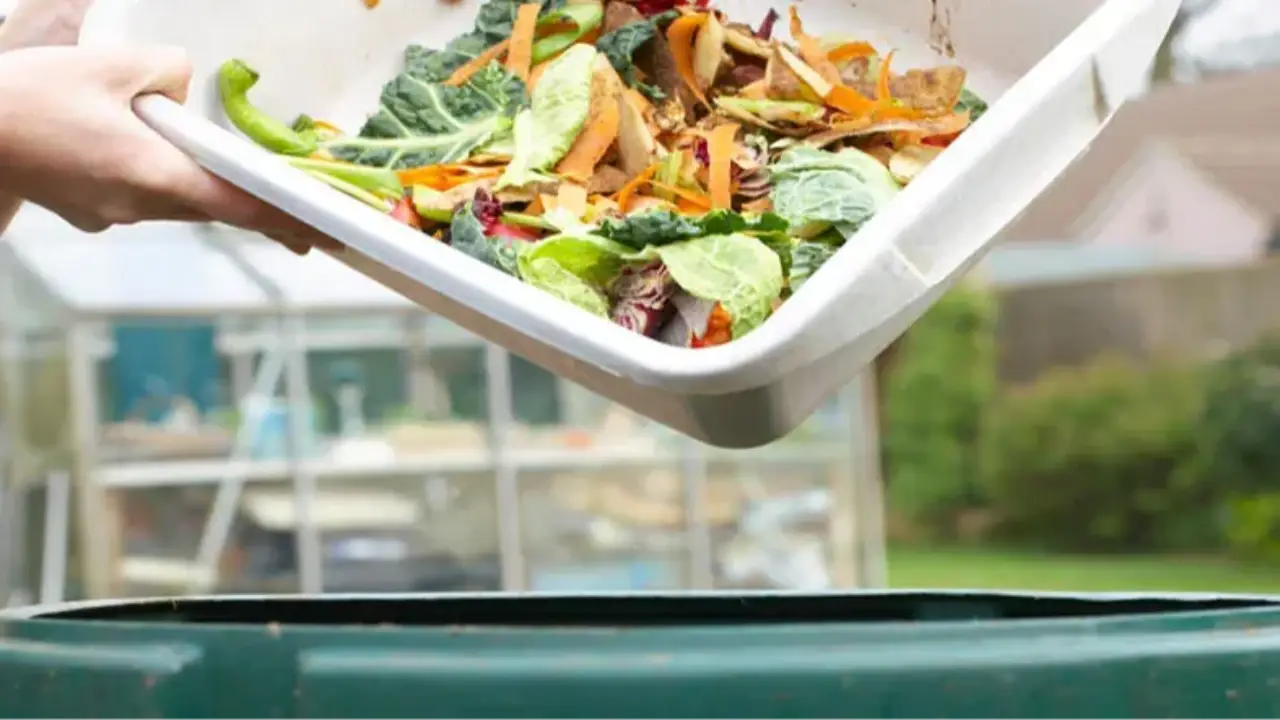
Sep 09, 2026Mrs. Jennings started off class by dumping two 55 gallon garbage cans full of rotting food onto a table in the middle of her fifth grade classroom.
Her students were shocked and disgusted as the smell of banana peels and warm hamburger meat filled the room. Mrs. Jennings explained that this is the amount of food that is wasted in the school cafeteria after a single lunch period. She then had a student go to the whiteboard and do the math of how much is wasted in a single week, and then another student calculated how much in a single year.
Then she pulled up the food scarcity data from their county and shared how common hunger is in the surrounding communities.
“We have a problem with food waste, friends. What should we do about it?” asked Mrs. Jennings.
For the next three weeks, the fifth grade class would try to solve that problem. They conducted research, talked to cafeteria staff, interviewed local food pantry workers, and designed campaigns to raise awareness and reduce food waste at school.
When the Competencies Become Essential
To complete this project, collaboration was not optional. There was too much work for a single student to complete all by themselves. If the fifth grade class was to make a measurable dent in the school’s food waste problem, students would have to adopt different roles, hold each other accountable, give each other critical feedback, and share the workload all the way to the finish line.
And the solution to the food waste problem was not clear. There was no chapter in a textbook or even an answer on ChatGPT that could fix their specific school’s issue. Students would have to evaluate a number of potential solutions, from composting, to share tables, to donation programs. Then they’d weigh the pros and cons of each, making data-informed decisions and adapting their strategies along the way. To solve this problem, students would have to critically think.
To meet deadlines they had to develop work ethic. Creating public service announcement videos required communication. Adjusting to new information they found in surveys and through research required adaptability. And staying motivated required empathy and global awareness.
This type of learning experience doesn’t treat these essential competencies as add-ons to the project; they are actually essential. The purposeful work drives the development of them.
Applied Learning
This learning unit is an example of applied learning. Students actively used the content and knowledge they obtained throughout the unit in an authentic context. Applied learning is at the heart of competency development in school because it takes the learning experience from the mind to action. It’s not sacrificing subject matter for skills, rather it’s actually reinforcing deeper learning because of the skill.
Applying Knowledge Deepens Learning
By applying the content in a tangible way, students are learning it deeper. When you physically engage with content, you're activating multiple senses at once: touch, movement, spatial awareness, and often vision and hearing. This multi-sensory input strengthens neural pathways and creates more retrieval cues in the brain, which makes the learning stickier and easier to recall.
Not to mention, in order to use the information, students have to actually process and understand it. The content has to move beyond short-term memory where it is often stored for an upcoming quiz, and instead find its home in long-term memory, where it can be recalled when needed in real-life situations. That transfer doesn't happen through passive listening or cramming. It happens through meaningful engagement when students do something with what they’ve learned.
It happens when students are engaging the essential competencies in school.
In the case of the Food Waste unit, it was understanding the content enough to communicate it persuasively to the rest of the student body.
There Is No Magic Framework
Applied learning isn’t really an instructional model as much as a way of viewing deeper learning and that it needs to be applied to have the greatest impact.
There are countless instructional models and strategies schools use to engage students in deeper learning. Project-based learning (PBL). Problem-based learning (PrBL). Service learning (SL). Inquiry-based approaches (IBL). Discussions (DBL). Simulations (SBL). Work-based learning experiences (WBL).
You want an acronym? The education world has got it.
It’s tempting to think one of these is the answer. That if schools would simply adopt the right framework, students would become more motivated, engaged, and prepared for life beyond graduation. But frameworks themselves are not magic. A project can feel meaningless. A discussion can be lifeless. A simulation can become another assignment students rush through to earn points. A service project can be just about graduation credit.
What Matters Is Purpose
What matters is not the framework itself, but whether students are asked to do work that feels purposeful. Work connected to a problem worth solving, a question worth answering, a person worth helping, or an outcome that matters beyond a gradebook.
Try This With a Unit You Already Teach
Take a unit you already teach and ask yourself:
- What are students learning? Identify the core knowledge or content you already teach.
- Where could they use it? Think of a real problem, question, audience, decision, or product that would require students to apply that knowledge.
- Who could care about the work besides me? It could be another class, families, a local organization, an expert, school leaders, or even their peers.
- Which competency would become necessary? Could the work require students to communicate, collaborate, think critically, problem solve, or adapt? They don’t have to use all of them in every task. Just pick one or two for them to zero in on.
- What is one change I could make? You don't have to rebuild the unit. Change one assignment, one audience, one problem, or one final product so students have a reason to use what they're learning.
You don't need to turn every unit into a three-week project. Sometimes applied learning starts by taking something students already do and giving them a more purposeful reason to do it.
This idea is at the heart of my upcoming book, Portrait of a Graduate, where I explore practical ways any k-12 classroom can develop the essential competencies students need in school, career, and life while still helping them learn academic content at a deep level. You can be the first to know when it releases here.
Stay Connected With Trevor's Work
Join thousands of educators who receive weekly articles, videos, and inspiration from Trevor.
SPAM is the worst. I promise to only send you my best stuff and NEVER to share your email.
Author