Why I Scrapped My AI-Generated Book Cover
Nov 12, 2026I spent the past two years writing my new book and designed the cover in about thirty seconds.
Okay, not really thirty seconds. I spent a couple hours prompting ChatGPT to generate the exact cover I wanted to represent Portrait of a Graduate. I had a concept in mind, prompted the AI, and wala, it made me a book cover.
And honestly, it looked pretty darn good. The color was right, the images were crisp, and it looked like something readers would like when the book hit the shelves. I even started using it on social media and on my slidedeck when giving keynotes.
Then one day I was having breakfast with a good friend sharing feedback from my editor about the book and excitedly telling him that I was getting close to putting it out into the world. This is a book about how to help students develop the human traits we so desperately need in our world, and how human educators can help them develop these competencies in school.
And then my friend said I love it and asked, “Do you have the cover yet?”
I felt a knot in my stomach. Something I felt a trace of when I made the cover and every time I put it on a screen came rushing in at full force in that moment.
I felt so little pride when I pulled out my phone to show my friend the cover. It wasn’t just that I skipped a step in traditional publishing or even that I used AI in a world that has a lot of mixed feelings about AI (which I do as well). I’m not anti AI and use it often to expedite tasks that don’t require my creativity, and sometimes use it as a thought partner to actually enhance my creativity.
But something didn’t feel right about using an AI-generated cover for a book that is about humans.
My book is about helping students become better creative, critical thinkers who can problem solve, communicate, and adapt in school and for the rest of their lives. And yet creating that cover with ChatGPT required little of those competencies. It was a shortcut that doesn’t represent what the book is about.
And this is my primary fear with AI. That people stop using the immense capacity they have to create. Us humans are creators; we create ideas, experiences, art, solutions, and connections. Not only does what we create have the potential to make other’s lives richer, there is also a unique joy we get to experience when we make something new in the world.
This AI-generated cover did not give me that joy.
This is the reason I don’t let my own children use AI for creative writing at home. I want them to experience the challenge and satisfaction of writing. I want my kids to develop their own voice and style before they ever use artificial intelligence as an assistant.
I also want their brains to grow and be durable, and that can’t happen when we outsource our thinking. It’s called cognitive offloading, and tons of recent research is showing that it’s happening at an increasing rate with the growth of AI. Greater dependence on AI results in lower confidence and creativity. I want my children to be confident, creative human beings.
I think we all want our students to be that.
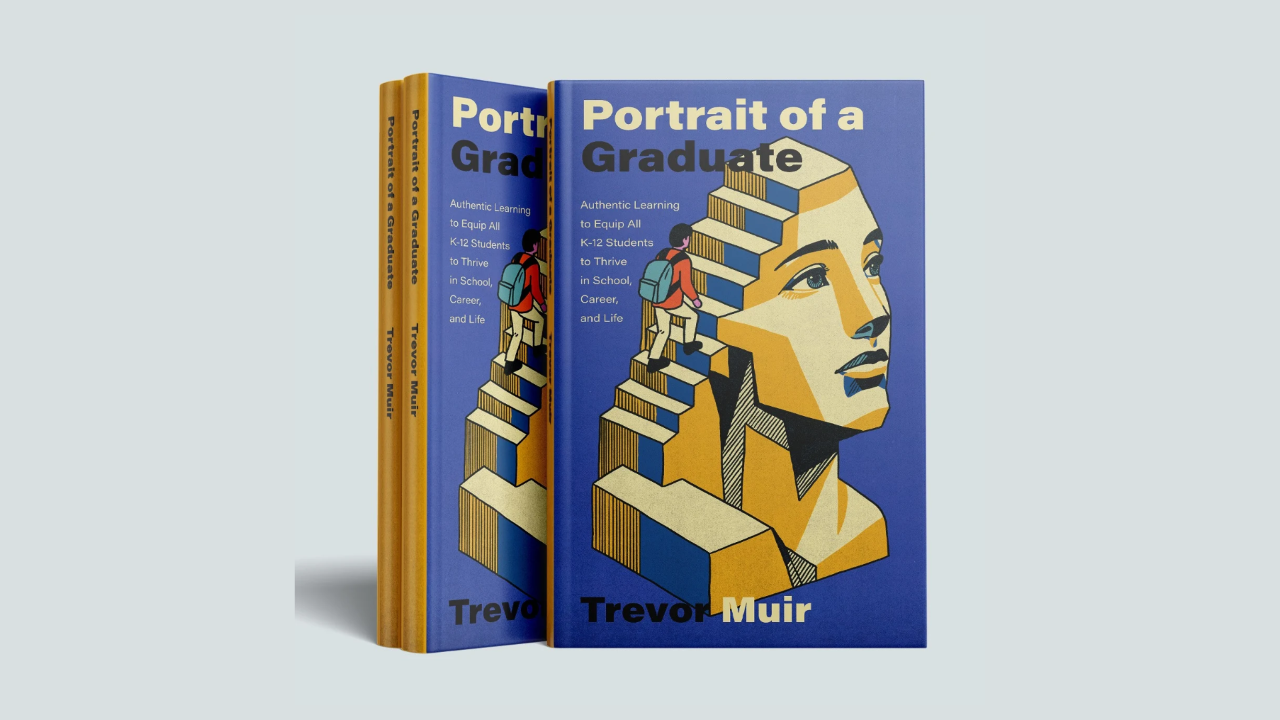
And I know I certainly want to be a more confident and creative person. So I decided to scrap my AI book cover. I found an artist in Athens, Greece named Barış Şehri who designs book covers that blow my mind. His hand-illustrated work is colorful and unique, and does not look like the typical ‘education book.’ This is what I wanted, so we hired Barış to give life to the cover.
And you know what? The work was messy.
Barış doesn’t work with previous concepts. Instead, he reads the manuscript and creates his own visual concepts. He doesn’t take orders like ChatGPT, rather suggestions. He gave me three cover concepts to choose from, and I had to make the painstaking decision of which to go with. Making decisions is hard. And even when I chose a concept I really liked but had strong requested revisions, he pushed back with even stronger professional thoughts. It was frustrating, difficult, and messy.
It was human.
And the result was something I’m super proud of.
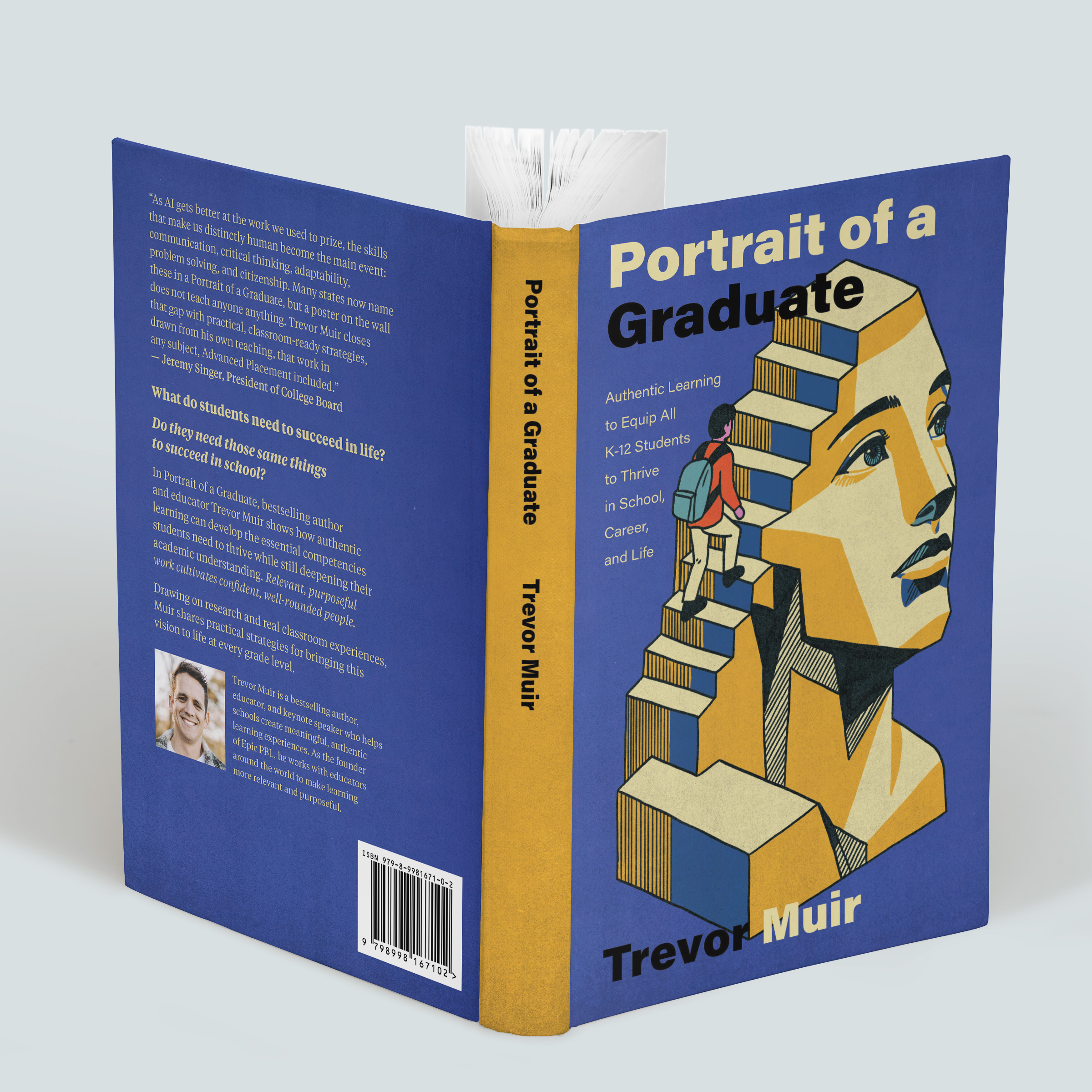
I’m tempted to explain all of my thinking behind the cover and what it represents to me, but I’ll leave that to you for now.
But I will say that it represents my writing. Barış captured the hopefulness my book is about in an abstract, beautiful way.
In this new world of automated thinking and artificial intelligence, may we resist cognitive offloading. Let’s use AI to make certain things more efficient and act as a thought partner when that’s helpful, but let’s also keep tapping into our creative capacities.
My son who is in 7th grade had a history project a few weeks ago where he had the option of creating a 3D model of a pyramid or to create a film. Most kids in his class chose to make the 3D model because the film would require writing a whole script, finding actors, directing, filming, editing, and the vulnerability to share your film with the entire 7th grade.
Jack wanted to do the film but said to me, “Making a pyramid would just be so much easier.”
So I dug deep from recent experience and responded, "Yeah but buddy, easier isn’t always better.”
Stay Connected With Trevor's Work
Join thousands of educators who receive weekly articles, videos, and inspiration from Trevor.
SPAM is the worst. I promise to only send you my best stuff and NEVER to share your email.
Author