Why Adults Need to Do Hard Things
Oct 08, 2026Last May, my wife asked me if I could help her install a couple raised beds in our side yard so she could grow flowers. I loved the idea, but I sadly had to remind her that the ravenous deer in our woods would never allow the flowers to grow a few days past germination.
So she asked if I could fence in the side yard to keep the deer out.
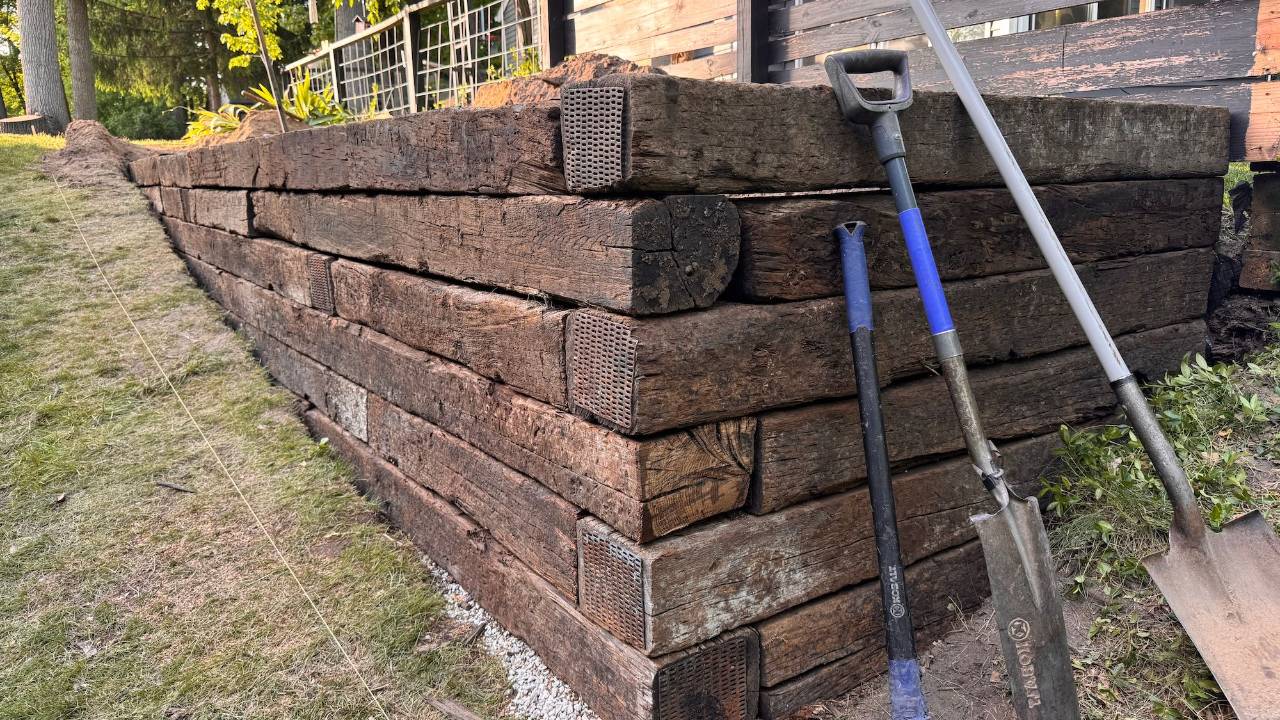
I responded that to do that, we’d have to build a retaining wall to bring the level of the yard up. And we’d need a dump truck to bring a load of dirt and another load of gravel. And I’d have to rent a machine to grade the new fill. And I’d have to hand dig 24 post holes for the fence and sink each one with 120 pounds of concrete. And then build six raised beds, fill them with soil, and actually figure out how to get flowers to grow.
If you give a mouse a cookie, he’ll ask for a glass of milk.
So I said, sorry, I don’t think we can grow flowers.
Not really. I spent all summer learning how to do all of it.
I learned how to measure and grade a space, install a landscape timber retaining wall, operate a skid steer, build a fence, and do a dozen other things I had never done before. I watched how-to videos, called my grandpa for help, and spent an incredible amount of time just staring at problems and trying to figure out what to do next.
At one point, I had to figure out how to get 300-pound landscape timbers off my truck by myself. Eventually, I tied one end of a hammock strap to the timber, the other to a tree, and slowly drove the truck forward.
The entire project was physically exhausting, but what I remember most is how much thinking it required.
Almost nothing came easily. I had to research, experiment, make mistakes, ask for help, try again, and solve one unfamiliar problem after another.
By the end of the summer, I knew how to do things I had no idea how to do three months earlier. And I didn’t learn them despite the difficulty. In many cases, I learned them because of it.
Desirable Difficulties
There’s a concept in cognitive science called “desirable difficulties.” The term was coined by psychologist Robert Bjork to describe certain challenges that can make learning more difficult in the moment but more durable over time.
This feels a little counterintuitive.
We tend to associate easy with effective. If information comes to us quickly, a task feels manageable and we can produce the right answer without much trouble, it feels like we’re learning.
But learning and immediate performance aren’t always the same thing.
Learning feels more difficult when we have to retrieve something from memory instead of looking it up. Spacing practice over time, mixing different types of problems together, and making a prediction before receiving an answer also increase challenge. Similarly, having to figure out which strategy to use makes the process harder. Under the right conditions, that additional effort can also make the learning more durable.
In other words, our brains benefit from having to work for it.
Old Dogs Can Learn New Tricks
There’s another reason I’ve come to appreciate experiences like my summer in the side yard.
My brain is still changing.
We often talk about neuroplasticity in relation to children. And for good reason. Young brains are remarkably plastic. But neuroplasticity doesn’t suddenly switch off when we reach adulthood. Our brains remain capable of changing throughout our lives. When we repeatedly learn and practice something new, the networks involved in that activity can change. Connections between neurons can strengthen or weaken, and the brain can become more efficient at performing skills that once required enormous concentration.
Anyone who has learned an instrument as an adult, started speaking another language, taken up woodworking, learned a new sport, or tried to master some complicated piece of technology has experienced this.
At first, everything requires conscious thought. Then, slowly, it doesn’t. The thing that once required a YouTube video, three phone calls, and 45 minutes of staring into space becomes something you simply know how to do.
That’s learning.
And it’s still available to us at 40, 50, 60, 70, and beyond. I didn’t know how to level a retaining wall, but now I do. And because my brain was challenged as I learned, I’m better at problem solving now than I was before this project.
Adults Need Hard Things Too
One of the strange things about becoming competent at adulthood is that we can get pretty good at avoiding being incompetent. We build our lives around things we know how to do. We develop routines. We specialize professionally. We use the tools we already understand. We gravitate toward hobbies we’re already decent at.
There’s nothing wrong with any of that. Expertise is useful. Educators have to rely on their expertise, and you can talk to any veteran teacher and they will tell you that the things that used to take a long time to resolve or do are like clockwork now. But sometimes that can lull us into complacency and prevent us from stepping outside our comfort zones.
There’s tremendous value in occasionally becoming a beginner again.
Learn guitar.
Build something you don’t know how to build.
Take a class.
Learn a language.
Try a sport you’re terrible at.
Cook something complicated.
Teach a lesson or unit in a brand new way.
Take on a project where your first thought is, I have absolutely no idea how to do that.
Novelty by itself isn’t some magical brain exercise. The value comes from actually learning: paying attention, practicing, getting feedback, making mistakes, adjusting, and gradually becoming capable of something you couldn’t do before.
That process can be uncomfortable. Which is part of the point.
Productive Struggle Matters in Our Professional Lives Too
I think educators especially need this reminder.
Teaching is incredibly difficult when you’re new. Almost everything requires conscious thought. You’re figuring out how to explain something, manage a classroom, assess learning, communicate with families, design lessons, handle conflict, and make a thousand tiny decisions every day.
And if you stick with it, you get better.
But expertise can also make it easier to stay with what we already know. Professional growth often requires introducing some difficulty back into our work.
Teach something you’ve never taught before. Completely redesign a unit you’ve taught for years. Try a different approach to assessment. Learn a new technology. Collaborate with someone outside your subject area. Ask a colleague to observe you and give you feedback. Try something you suspect might work even though you aren’t yet very good at it.
Years of experience certainly matter, but experience alone doesn’t guarantee continued growth. Growth requires us to keep encountering things that demand something new from us.
Sometimes it’s good to feel like a rookie again.
What This Means for Students
Of course, all of this has implications for the young people sitting in our classrooms.
One of the hard things about teaching is that we know giving students challenging work to do is good for their brains, but students don’t necessarily want to do challenging work.
When a student struggles, our instinct is often to help. We explain the directions again or give them a hint. Sometimes we simply show them what to do. Obviously there are plenty of situations where that support is exactly what a student needs. But there are also times when we help too quickly.
A student says, “I don’t know,” and we supply the answer. They can’t remember something, so we tell them where to find it. They get stuck on a problem, so we walk them through the solution.
In our effort to support students, we can accidentally remove the thinking we wanted them to do in the first place. Sometimes the better response to “I don’t know” is, “Think about it for another minute.”
Sometimes it’s, “What do you already know that might help?”
Or, “What have you tried?”
Or, “Make your best prediction.”
Or simply, “Try something.”
In all my years leading project-based learning, the students who often seem to struggle with it the most are my ‘A students.’ The high achievers usually like when there is a clear pathway to success. Letting them struggle with ambiguity or the unknowns that come with an authentic project creates a cognitive load they are not used to. But this is all the more reason to embed desirable difficulties. Challenge is good for their growth and development.
Making Difficulty Desirable
There is an important distinction here.
Difficulty is not inherently good.
Giving students work they are completely unprepared to do isn’t productive struggle, just as overwhelming them with information or allowing them to sit confused and frustrated for half an hour isn't good for their learning.
For a difficulty to be desirable, students need enough knowledge and support to have a reasonable chance of eventually succeeding. And that’s where the craft of teaching comes in. We have to know when a student needs another minute and when they need another explanation. When to ask a question and when to give an answer. When frustration is part of working through something difficult and when it has become a barrier to learning.
There isn’t a perfect formula for this. But I think there is a useful question we can ask ourselves: Am I helping this student move forward, or am I doing the thinking for them?
Be a Beginner Again
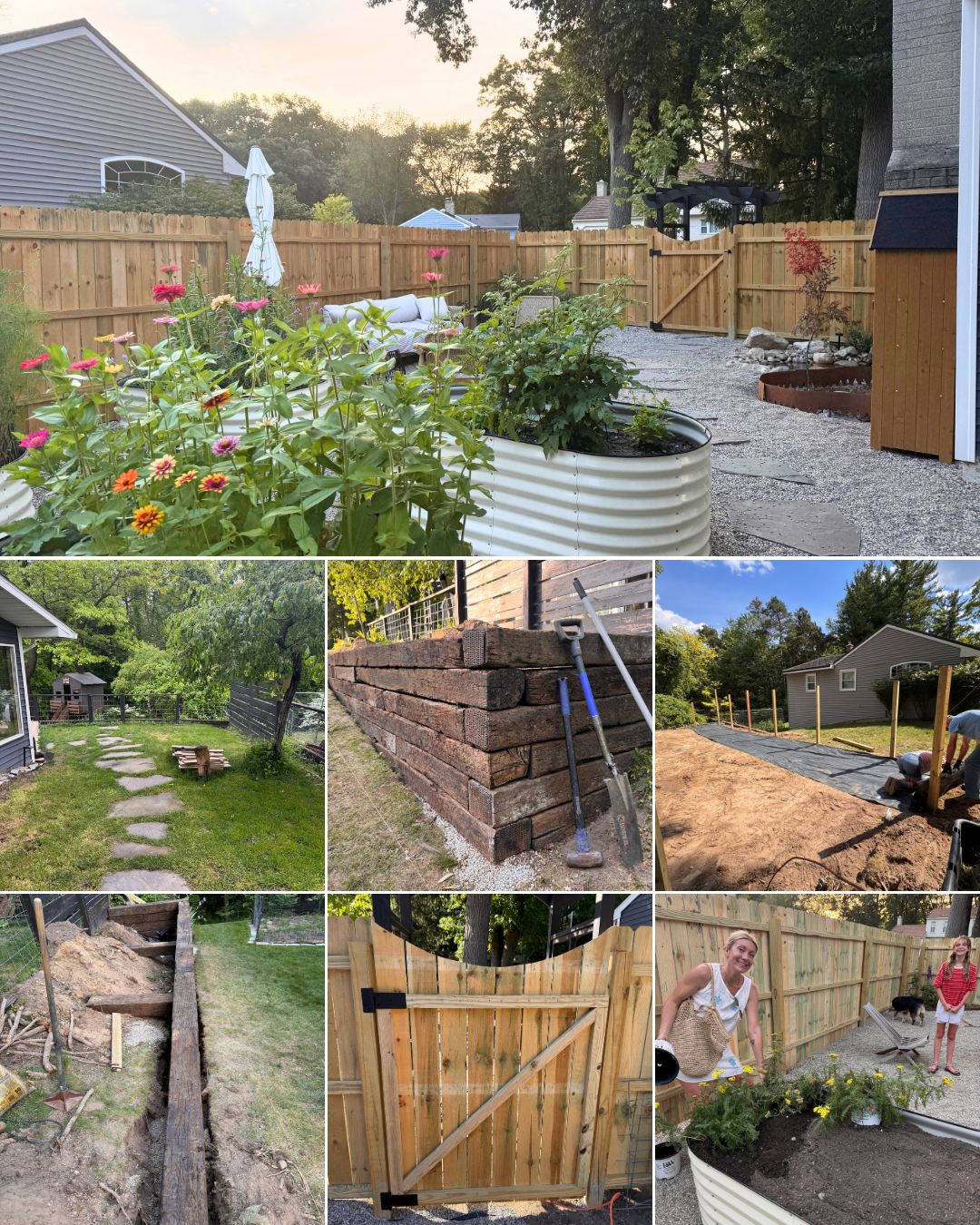
By the end of last summer, our side yard looked completely different.
There was a retaining wall where there hadn’t been one before. A fence surrounded the yard. Raised beds were filled with soil. Flowers were growing without immediately becoming dinner for the deer. I even built a small pond with a waterfall but I wasn’t ready for the project to end.
But I was different too.
I knew how to do things I hadn’t known how to do a few months earlier. And maybe that’s one of the reasons we should keep taking on things that feel a little beyond us, whether we’re four years old or forty (am I really that old?!).
There’s something healthy about occasionally being bad at something. About watching the tutorial and calling someone who knows more than you. Trying something and realizing it didn’t work. Going back and doing it differently.
Staring at a 300-pound landscape timber in the back of your truck and thinking, How in the world am I going to get this thing out of here?
Because eventually, one way or another, you figure something out. And each time we do, we get a little more comfortable with one of the most important sentences a learner can say:
I don’t know how to do this yet.
But I can probably figure it out.
Stay Connected With Trevor's Work
Join thousands of educators who receive weekly articles, videos, and inspiration from Trevor.
SPAM is the worst. I promise to only send you my best stuff and NEVER to share your email.
Author