
Why Students (and Adults) Need Boredom
Jan 14, 2026One of the great gifts of the 21st century is that you never have to be bored again. All you have to do at a red light or in line at the grocery store is pull out the supercomputer in your pocket and pass the time with emails, headlines, or puppy videos.
And one of the great curses of the 21st century is that you never have to be bored again.
For all the purposes technology serves, it feels like the primary one is the elimination of boredom. Social media gives us the constant influx of dopamine. Tablets keep kids quiet in the car. AI removes the tedium of writing. Laptops in schools add sounds and visuals to dull learning experiences. People don’t have to be bored if they don’t want to be anymore.
And emerging research shows this lack of boredom is not good for the human brain, and psychologists are beginning to understand why.
The Connection Between Boredom and Creativity
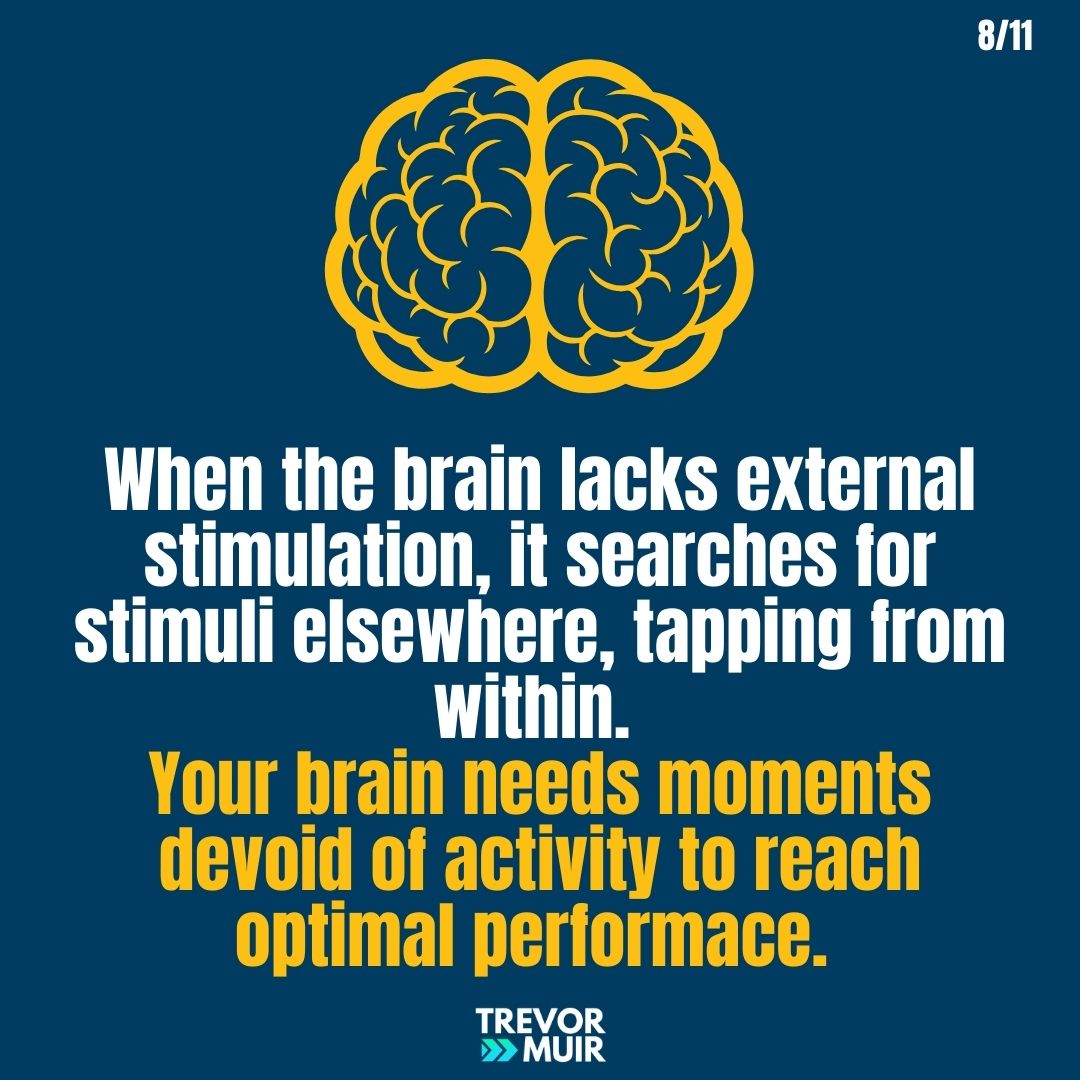
Studies have shown that people asked to complete a deliberately boring task before a creative challenge consistently generate more original ideas than those who were not bored first. During boring moments, the brain begins searching for meaning, connections, and novelty on its own. Neural activity during boredom remains remarkably high, nearly as active as when the brain is fully engaged. When you are bored, what researchers call the brain’s default state,’ it shifts toward organizing memories, simulating future possibilities, and making unexpected associations.
I was at the dentist this week with nothing to do but listen to the sound of the hygienist scraping my teeth (didn’t love that), and for the first 10 minutes I was wishing I could watch TV or look at my phone. But after about 10 minutes I began entering a different state of mind. I started replaying a scene from this past weekend when I was deer hunting (successfully I should add, but I’ll spare you the details). And then I started thinking about a piece of writing I’m working on and came up with an idea for it I hadn’t thought of before. Then I remembered an email I forgot to send yesterday and made a mental note to send it out after the appointment.
And it hit me: this is my brain on boredom.
What feels like wasted time is often the brain doing some of its most important work. When we eliminate boredom entirely, we also eliminate the mental space where creativity, reflection, and problem solving quietly take shape.
So let’s talk about what this means for students, but let’s start with what it means for us first.
Unlocking Our Own Creativity With Boredom
Where are the quiet moments in your life that you often fill with something? And what would it be like to allow those moments to stay quiet? I know for me, it’s driving. Whether it's playing podcasts or music, rarely do I drive in silence. Yet when I do exercise the discipline to allow a degree of boredom, some of my best thinking happens in the car.
But this requires discipline, especially as there are so many forms of media competing for my attention. I even bought a tool called a Brick that locks up every app on my phone that I use to cure boredom with. When I touch my phone to this little plastic ‘brick’ that I keep on my counter, Instagram, Facebook, Spotify, and my email are inaccessible until I touch my phone to the Brick again.
Then when I’m at a traffic light, in line at the grocery store, or on a hike, my phone is not an option. This is a self-imposed restriction that helps me be present… and bored. Because I’ve discovered that I need boredom.
If you're an educator or leader, your work is inherently creative. From creative learning experiences to creative problem solving, one of your primary tasks is exercising your creative mind. So to maximize that output, you have to give your brain the time and space to be still.
Schedule a daily walk or hike. Drive in silence. Eat lunch by yourself a few times a week and force yourself to not watch or listen to anything while you do it. Embrace boredom and notice if it has a positive effect on you.
Helping Students Embrace Boredom
We have to give students opportunities to embrace boredom as well.
The problem is, like I said earlier, society has led students to believe that we should never be bored. And school has quietly trained students to believe that if they are not constantly busy, entertained, or producing something, then they are “off task.” Many students have learned to fear that empty space. The second a moment feels slower or uncomfortable, they reach for stimulation. They want the quick hit: the video, the game, the constant noise in their earbuds, the scrolling, the tab switching. Not because they’re lazy, but because their brains have been conditioned to avoid boredom like it’s something to escape.
But boredom is not the enemy of learning. It’s often the pathway to creativity and deeper learning. So like for ourselves, we need to create disciplines that are baked into our classrooms and help students understand the purpose of these disciplines. Here are a couple strategies to do this:
Strategy 1: Start With Two Minutes of Silence
Before a writing prompt, before discussion, before any problem solving- give students two minutes of quiet. No talking, no devices, not even instructions beyond “sit and think.” This gives their brains space to warm up internally before they are asked to produce something.
During these two minutes their brains will start generating their own stimulation, and so when you introduce the task they will likely be better primed to complete it. Two minutes of uninterrupted silence with no particular task may be a huge challenge for students at first. Sitting with nothing to do is most likely not normal for them! But explain the reasoning, have them reflect on it, and use this practice often. Coping with and then embracing boredom is a skill your students will improve with repetition.
Strategy 2: Do Something Repetitive First, Then Go Creative
Give students a short task that is intentionally repetitive, predictable, and low demand. Something that doesn’t require them to make decisions or perform for a grade, but puts them on autopilot so their brains start to wander.
After this short task, immediately shift to a related task but one that requires creativity and problem solving. This might seem like busy-work to students, so explain the reasoning behind this exercise to them. “We are revving up our brains for creative work. And one of the best ways to do that is letting it wander for a few minutes before we get started.”
Here are some examples:
ELA
- Boring Task: Copy a short passage by hand
- Related Follow-up: Write a new ending.
- Boring Task: List 10 plain verbs
- Related Follow-up: Upgrade them into vivid verbs.
Math
- Boring Task: Copy a set of equations exactly as written (no solving)
- Related Follow-up: Create a word problem that could match one equation.
- Boring Task: Trace a simple graph or geometric figure
- Related Follow-up: Design a new version that tells a different “story” (steeper, wider, shifted, scaled).
Science
- Boring Task: Label a diagram
- Related Follow-up: Design an experiment question based on it.
- Boring Task: Record 3 “boring” measurements
- Related Follow-up: Predict what might happen if one variable changes.
Social Studies
- Boring Task: Copy a short primary source excerpt
- Related Follow-up: Write the “missing paragraph.”
- Boring Task: Fill in a timeline
- Related Follow-up: Imagine how one event could have gone differently.
For many students, school is already inherently boring, so it’s crucial to let them know the purpose behind activities that are using boredom as a tool. Because that’s really what boredom can be, a tool to help us become our most creative selves. Doing pre-creative, low stimulation exercises isn’t about adding boredom to their lives as a form of torture.
It’s about amplifying what their brains are capable of.
In the same way, forcing ourselves to drive in silence or keep our phones put away in line at the grocery store is not to make our lives duller. In fact it's the opposite. We embrace boredom because it sharpens our creativity. When we’re left alone with our thoughts long enough, those thoughts can turn into something useful.
Listen to the Podcast Episode, Why Students (and Adults) Need Boredom on The Epic Classroom Podcast with Trevor Muir
Stay Connected With Trevor's Work
Join thousands of educators who receive weekly articles, videos, and inspiration from Trevor.
SPAM is the worst. I promise to only send you my best stuff and NEVER to share your email.
Author