The Magic of Getting Out of the Classroom
Oct 22, 2026“Grab your notebooks, make sure you have a pen, and follow me into the forest.”
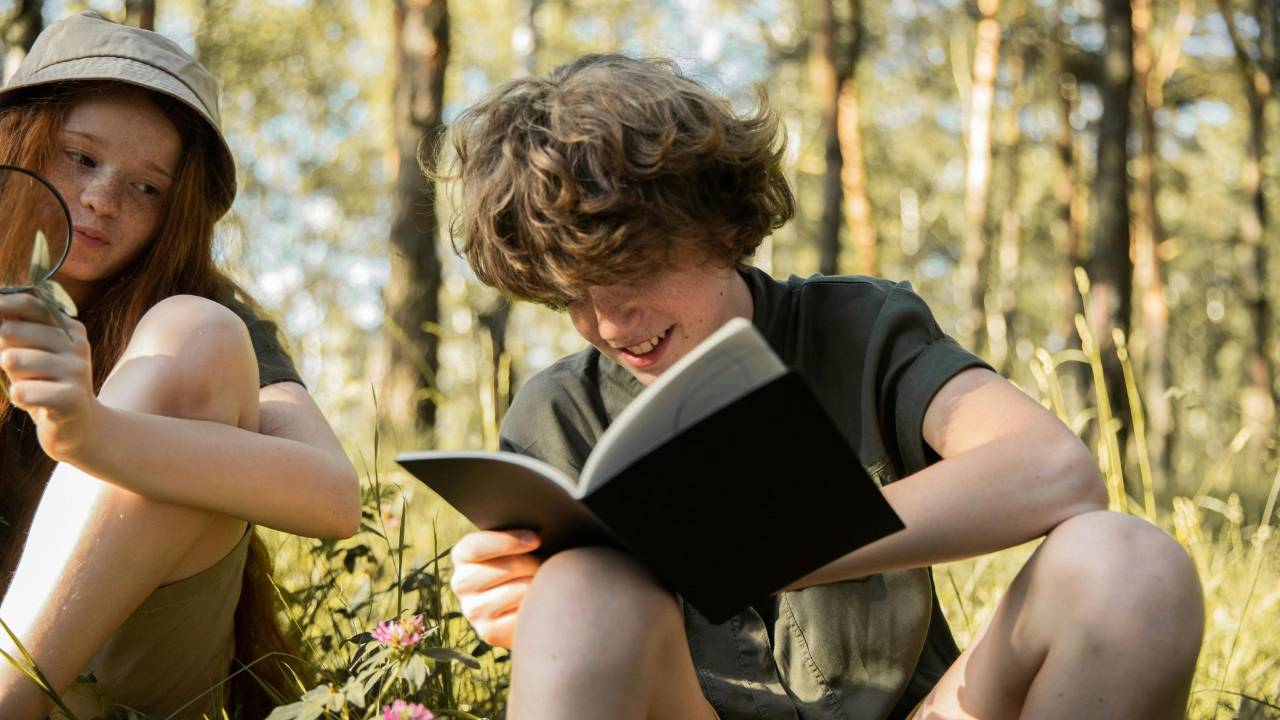
My daughter’s teacher announced at the start of class that this would officially be the Magic Spot Day. There is lore surrounding the Magic Spots at my daughter’s 5/6th grade school. The school sits on the edge of a county park, and at the beginning of the fifth grade year, students hike a little ways into the woods where they choose a place at the bottom of a tree-covered hill where they will regularly return to for the next two years to sit in quiet and write. Every student in the school gets their own special place in the forest to write poetry, journal entries, and stories.
And my little girl, Piper, loves it.
Here’s the thing though, they could just do all of their creative writing at their desks. First, they’d be saving five minutes by not having to hike into the woods. Not to mention, they’d never have to worry about bug bites, poison ivy, or kids getting dirt stains on the seat of their pants. Those are reasonable excuses to keep it business as usual.
But there’s something magical that happens when the students go outside to write.
It’s forest bathing. Fresh air. Vitamin D. Stillness and peace in a chaotic world.
Not to mention, it’s somewhere other than the classroom.
The Power of a Change of Scenery
We take our laptops to coffee shops when we need a change of scenery. We move to the porch to read a good book. Just last week I was in Idaho to be with a school district, and the day before my engagement I was working on my new book at my hotel. My deadline is approaching and I absolutely needed to finish the chapter I was working on. And yet I could not get the words to show up on the blank page.
So I left the Marriott and drove to a nearby mountain to hike a few miles. That might seem foolish. You can’t write while hiking (especially because my head was on a swivel the whole time to make sure there wasn’t a grizzly around the next bend). But I’m telling you, when I got back to my hotel room, it was like my brain was unlocked. I sat down and wrote several thousand words and it felt effortless.
The hike may have lessened the time I had at my disposal to write, but it made the time I did have so much more fruitful and productive. And there's actually some science behind this.
Our brains are wired to pay attention to novelty. When we enter a new environment, we naturally become more alert to what's around us. New sights, sounds, and experiences can spark curiosity and give our brains something fresh to work with. Part of this happens in the hippocampus, a region of the brain involved in learning and memory.
When the hippocampus detects something new or unexpected, it communicates with parts of the brain responsible for producing dopamine, a chemical involved in motivation and learning. This interaction helps strengthen the neural connections involved in forming memories. In other words, new experiences can help put our brains in a state that supports learning.
When Piper’s teacher takes the class to their Magic Spots, rocks beneath trees in the woods behind the school, they are stimulating curiosity and activating attention in ways the familiar classroom environment might not. There’s power in a change in setting.
Not to mention, there’s the added value in the setting being outdoors. Research suggests that spending time in nature can help restore our ability to focus and concentrate. Psychologists call this Attention Restoration Theory. Throughout the school day, students use enormous amounts of mental energy concentrating on lessons, following directions, socializing, and filtering out distractions. But our capacity for sustained attention is limited and eventually we become mentally fatigued.
How Nature Restores Our Attention
Natural environments replenish that capacity. The gentle movement of leaves, the fractal shapes found in the canopy (go read about this--- it’s fascinating!), the sound of birds, and sunlight filtering through branches capture our attention without demanding much mental effort. This gives the parts of our attention system responsible for intense concentration a chance to recover.
In fact, researchers at the University of Michigan found that people who took a walk through a natural environment performed better on tests of attention and working memory than those who walked through an urban environment.
So when Piper settles onto her rock beneath the trees and opens her notebook, she's in an environment that can help her concentrate, notice new details, and find inspiration for whatever she's about to write. The change in setting combined with outdoor time is good for the learner and good for the human.
But changing the classroom setting, especially outdoors, is not the norm for most schools. There are logistical issues, time constraints, limited spaces to go to, as well as the undeniable reality that students are not always easy to manage in new places.
Making Learning Outside the Classroom Work
I used to take my high school class outside on sunny days for silent reading. They usually showed their appreciation for being outdoors by opening up their books and reading. But I’ll never forget the time a student threw a stick at another student, and that other student retaliated by throwing a handful of dirt back at him. And before I could stop them, they were chasing each other around while the rest of the class laughed. And then my principal happened to walk out into the school courtyard at this exact moment.
This did not help make my case for why teachers should be allowed to take their students out of the classroom more. But the value of it is usually undeniable. So I had to create structures and boundaries to make sure I could preserve this time.
Three Ways to Make a Change of Scenery Successful
1. Changing Settings Is a Privilege You Can Lose
I always made it clear to my students that learning outside of the classroom was a privilege, and privileges come with responsibilities. If we were going to take advantage of a beautiful day and head outside, I needed to know they could handle the freedom that came with it.
This meant setting expectations before we ever walked out the door. Students knew what they were supposed to accomplish, where they were allowed to go, and what would happen if they couldn't follow directions.
And if someone decided to throw sticks, chase classmates, or turn our reading time into recess, they might lose the opportunity to join us the next time.
The key was following through. Students quickly learned that the more responsibility they demonstrated, the more freedom they could enjoy. And eventually, heading outside became something they looked forward to and worked to preserve.
2. Establish Ground Rules for New Settings
Speaking of those expectations. Every new learning environment comes with new distractions. A classroom has desks, walls, and familiar routines. Outside, there are squirrels, passing cars, interesting rocks, friends to talk to, and approximately one million other things that might capture students' attention.
This is why I recommend establishing a specific set of expectations for learning outside the classroom.
For example, students need to know the physical boundaries of where they're allowed to go. They should understand what appropriate noise levels look like, how to respond when the teacher needs everyone's attention, and what to do when they've completed their work.
I actually created a free Outdoor Learning Norms Poster that teachers can use to establish these expectations with their students. This is something you can review with them every single time you go outside or change the classroom setting. It's not foolproof, but it's another way to reinforce boundaries that make interesting learning possible.
3. Follow Firm Time Structures to Keep It Efficient
One of the biggest objections I hear from teachers about changing learning environments is that it takes too much time. And they're right that walking twenty-five students to a courtyard, library, or nearby park can eat into instructional time.
But it doesn't have to be that disruptive.
The more intentional you are with the time, the easier it becomes to take learning somewhere new. Before leaving the classroom for the Magic Spots, students know exactly what they need to bring, what they should be working on, and how much time they have to complete it.
In my class, if we had thirty minutes for silent reading, I might give students three minutes to get outside and find a spot, twenty-four minutes to read, and three minutes to return to class. Having a clear timeline helped us avoid wasting precious minutes getting organized once we arrived.
And the more often we practiced these routines and reviewed these expectations, the more efficient they became.
Of course, sometimes changing locations really does mean sacrificing a few minutes of instructional time. But I think back to my hike in Idaho. I lost a couple of hours I could have spent writing, yet the time I spent writing afterward was far more productive.
Sometimes the minutes we spend changing our environment are well worth what we gain when we get there. And when kids (and adults) spend time outside bathing in nature and lost in wonder, we’re teaching students a practice they can use for the rest of their lives.
Stay Connected With Trevor's Work
Join thousands of educators who receive weekly articles, videos, and inspiration from Trevor.
SPAM is the worst. I promise to only send you my best stuff and NEVER to share your email.
Author