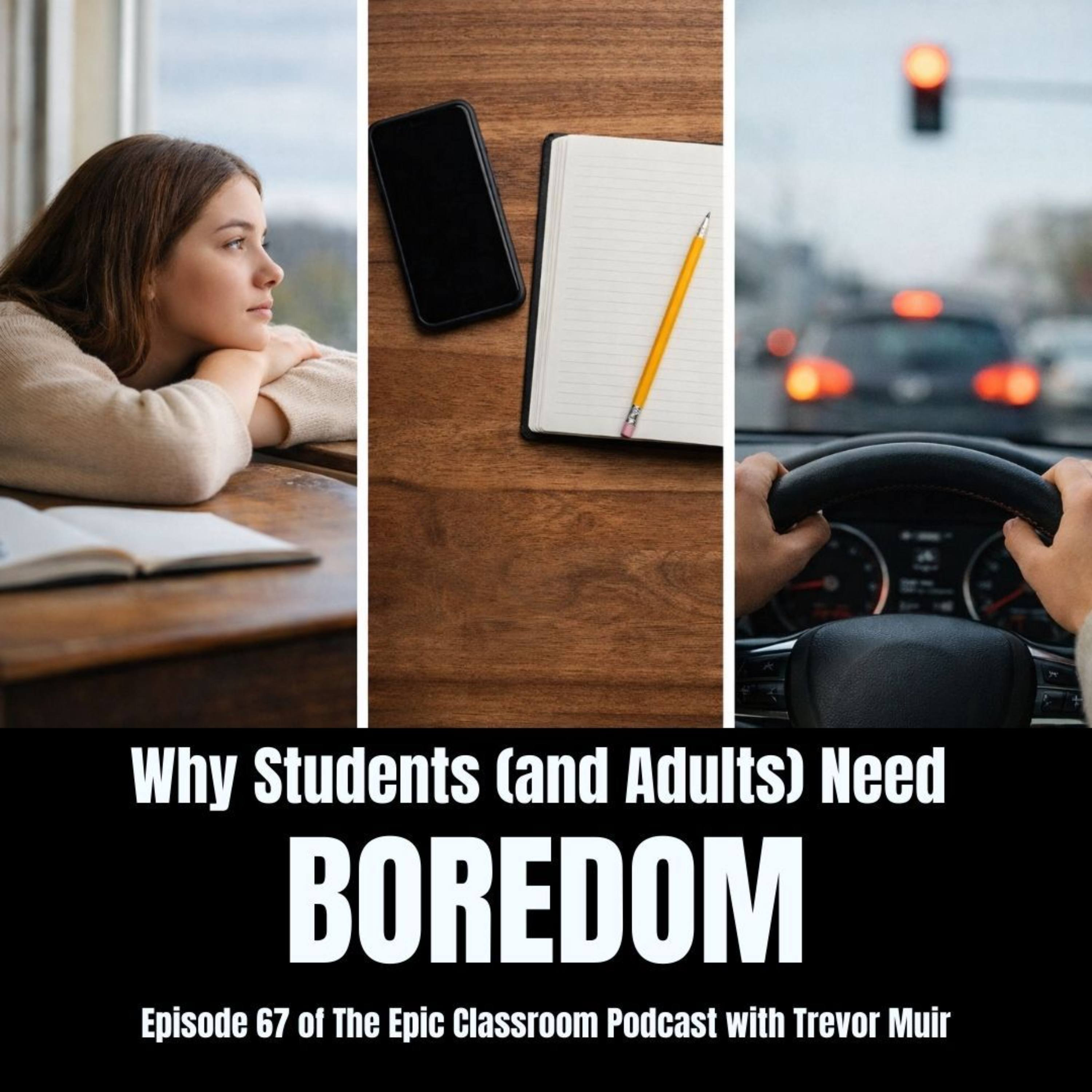
| One of the great gifts of the 21st century is that you never have to be bored again. All you have to do at a red light or in line at the grocery store is pull out the supercomputer in your pocket and pass the time with emails, headlines, or puppy videos.
And one of the great curses of the 21st century is that you never have to be bored again.
For all the purposes technology serves, it feels like the primary one is the elimination of boredom. Social media gives us the constant influx of dopamine. Tablets keep kids quiet in the car. AI removes the tedium of writing. Laptops in schools add sounds and visuals to dull learning experiences. People don’t have to be bored if they don’t want to be anymore.
And emerging research shows this lack of boredom is not good for the human brain, and psychologists are beginning to understand why.
The Connection Between Boredom and Creativity
Studies have shown that people asked to complete a deliberately boring task before a creative challenge consistently generate more original ideas than those who were not bored first. During boring moments, the brain begins searching for meaning, connections, and novelty on its own. Neural activity during boredom remains remarkably high, nearly as active as when the brain is fully engaged. When you are bored, what researchers call the brain’s default state,’ it shifts toward organizing memories, simulating future possibilities, and making unexpected associations.
I was at the dentist this week with nothing to do but listen to the sound of the hygienist scraping my teeth (didn’t love that), and for the first 10 minutes I was wishing I could watch TV or look at my phone. But after about 10 minutes I began entering a different state of mind. I started replaying a scene from this past weekend when I was deer hunting (successfully I should add, but I’ll spare you the details). And then I started thinking about a piece of writing I’m working on and came up with an idea for it I hadn’t thought of before. Then I remembered an email I forgot to send yesterday and made a mental note to send it out after the appointment.
And it hit me: this is my brain on boredom.
What feels like wasted time is often the brain doing some of its most important work. When we eliminate boredom entirely, we also eliminate the mental space where creativity, reflection, and problem solving quietly take shape.
So let’s talk about what this means for students, but let’s start with what it means for us first. |